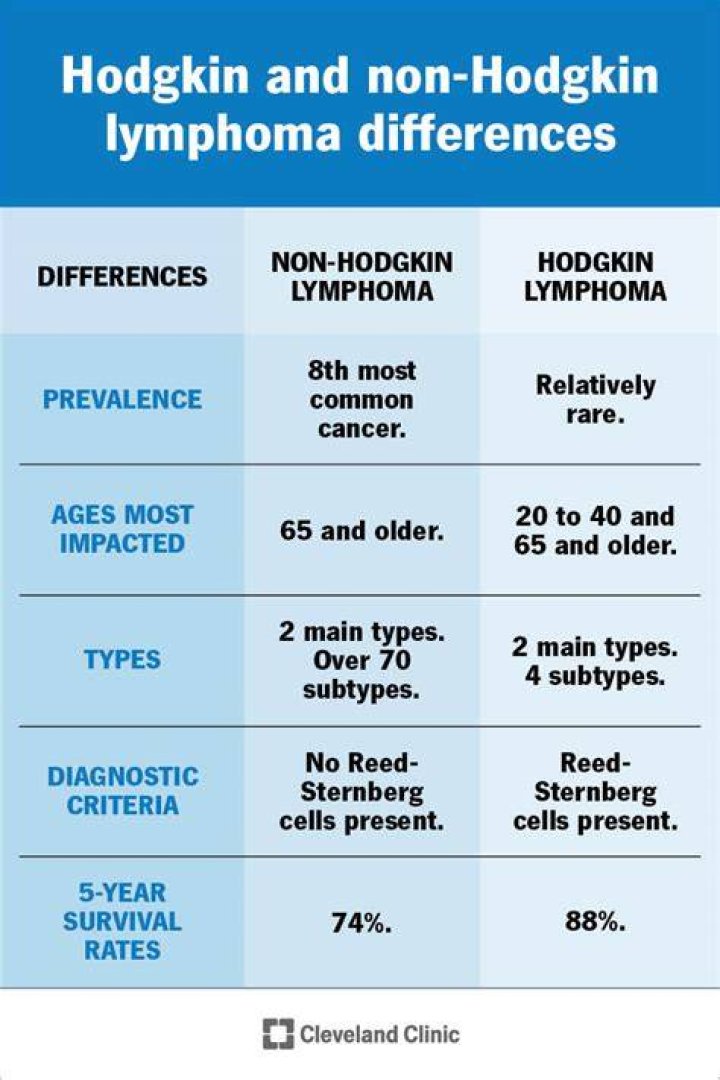
Which is more serious Hodgkin's or non-Hodgkin lymphoma?
The prognosis of Hodgkin's lymphoma is also better than that of non-Hodgkin's lymphoma since non-Hodgkin's lymphoma is often diagnosed at a more advanced stage. Both forms of blood cancer are treatable when caught early, however.
What is the difference between non Hodgkins lymphoma and Hodgkin's lymphoma?
The primary difference between Hodgkin and non-Hodgkin lymphoma is the type of lymphocyte that is affected. Hodgkin lymphoma is marked by the presence of Reed-Sternberg lymphocytes, which a physician can identify using a microscope. In non-Hodgkin lymphoma, these cells are not present.
Which type of lymphoma is considered more serious?
Burkitt lymphoma is considered the most aggressive form of lymphoma and is one of the fastest growing of all cancers.
Which lymphoma is most curable?
Hodgkin lymphoma is also known as Hodgkin's disease. It usually begins in a type of B cell that is found in the bone marrow. Hodgkin's disease is considered one of the most curable forms of cancer, especially if it is diagnosed and treated early.
Hodgkin’s Vs Non-Hodgkin’s Lymphoma
Is non-Hodgkin's lymphoma a death sentence?
What is the survival rate for non-Hodgkin lymphoma? According to the American Cancer Society, about 71 percent of people of all races with non-Hodgkin lymphoma are still alive five years after diagnosis. Children tend to fare better, with 87 percent living for at least five years after diagnosis.
Which has better survival rate Hodgkin's or non-Hodgkin lymphoma?
More than 86 percent of patients diagnosed with Hodgkin lymphoma survive five years or more. About 70 percent of patients diagnosed with non-Hodgkin lymphoma survive five years or more. There are six varieties of Hodgkin lymphoma.
How serious is non-Hodgkin's lymphoma?
NHL is a serious condition but commonly has a relatively promising outlook. Most people with NHL survive at least 5 years after a diagnosis. However, older people are more likely to die from the condition. Other factors that affect the outlook include the stage and spread of the cancer.
Is non-Hodgkin's lymphoma terminal?
Survival for all non-Hodgkin lymphomas
Generally, for people with non-Hodgkin lymphoma in England: around 80 out of every 100 people (around 80%) survive their cancer for 1 year or more after they are diagnosed. around 65 out of every 100 people (around 65%) survive their cancer for 5 years or more after diagnosis.
Can you be cured of non-Hodgkin's lymphoma?
Yes, NHL is a very treatable disease and curable in many cases, particularly with aggressive NHL. Before treatment begins, it is necessary to know how far the cancer has advanced. This is called the stage of the disease. The stages begin with I (least severe) and go through IV (most severe).
How fast does non-Hodgkin's lymphoma spread?
This fast-growing lymphoma accounts for about one third of NHL cases. For this lymphoma, it is typical for lymph nodes to double in size every month, and patients often present within a few months of having noted an enlarged lymph node.
Can you have both Hodgkin's and non-Hodgkin's lymphoma?
The occurrence of HD and NHL in an individual is unusual. Tumour biological features common to both HD and NHL may indicate a similar cellular origin, regardless of the time interval between the diagnoses, and may contribute to the understanding of the pathogenesis of lymphoma.
What are the 3 main types of lymphoma?
Each type of lymphoma can cause different symptoms and need different treatment.
- Hodgkin lymphoma. ...
- Non-Hodgkin lymphoma. ...
- Chronic lymphocytic leukaemia (CLL) and small lymphocytic lymphoma (SLL) ...
- Lymphoma in children and young people.
Which is worse leukemia or lymphoma?
Which is more aggressive: leukemia or lymphoma? The survival rate for lymphoma is higher than leukemia. According to the Leukemia and Lymphoma Society, the 5-year survival rate of all leukemias combined is 65.8 percent.
What kind of lymphoma did Jackie Kennedy have?
Kennedy was diagnosed in January with non-Hodgkin's lymphoma, a cancer that affects the lymph system, and had been receiving regular chemotherapy treatments since then. If caught early, some types of the disease are treatable, and in the beginning her doctors were optimistic.
Who is most likely to get non-Hodgkin's lymphoma?
More research is needed to understand the possible link between pesticides and the development of non-Hodgkin's lymphoma. Older age. Non-Hodgkin's lymphoma can occur at any age, but the risk increases with age. It's most common in people 60 or over.
Can you go into remission with non-Hodgkin's lymphoma?
Hodgkin lymphoma and high-grade non-Hodgkin lymphoma often goes into complete remission and needs no further treatment. However, some people relapse and need more treatment.
How long can you live with untreated non-Hodgkin's lymphoma?
Most people with indolent non-Hodgkin lymphoma will live 20 years after diagnosis. Faster-growing cancers (aggressive lymphomas) have a worse prognosis.
Can non-Hodgkin's lymphoma spread to the brain?
Regardless of how quickly they grow, all non-Hodgkin lymphomas can spread to other parts of the lymph system if not treated. Eventually, they can also spread to other parts of the body, such as the liver, brain, or bone marrow.
What are the final stages of non Hodgkin's lymphoma?
Stage IV lymphoma has spread outside your lymph nodes to many places in your body. NHL tends to spread to the bone marrow, liver, lungs, and the fluid around the brain.
Is lymphoma a painful death?
Will I be in pain when I die? Your medical team will do all they can to lessen any pain you feel in your final days. No one can say for certain how you'll feel but death from lymphoma is usually comfortable and painless.
Where does lymphoma usually start?
Lymphoma is cancer that begins in infection-fighting cells of the immune system, called lymphocytes. These cells are in the lymph nodes, spleen, thymus, bone marrow, and other parts of the body.